- About
- Product
Products
Skin Conditions

- Treatments
- Homecare
- Gallery

 Find A Clinic
- Find A Clinic
- About
- Devices

- Products
- Skin Conditions
- Treatments
- Homecare
- Gallery
- Contact Us
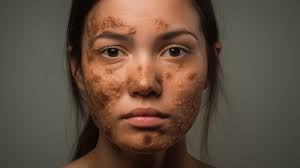
What Are Scars?
A scar is a mark left on the skin after a wound or injury has healed. Scars are a natural part of the body’s healing process when the skin tissue has been damaged. When the skin is injured, the body produces collagen (a protein) to repair the damaged tissue. This collagen forms a scar as the wound heals. Scars can vary in size, shape, and color depending on the nature of the injury, the healing process, and the type of skin involved.
Scars are usually permanent, but their appearance can improve over time. Factors such as age, genetics, the location of the scar, and the type of injury all play a role in how noticeable the scar will be. Some scars may fade significantly over time, while others may remain more prominent.
Types of Scars
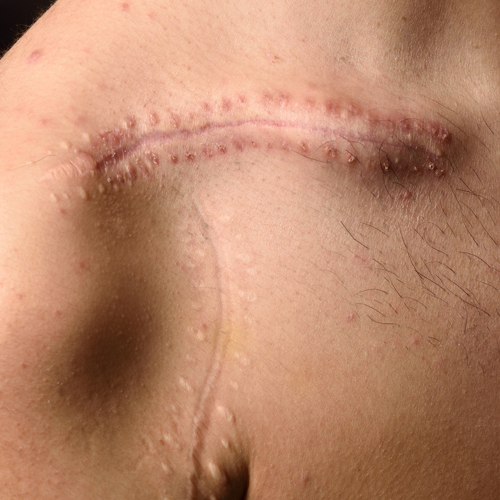
Hypertrophic Scars
These scars are raised, thick, and red or pink in color. They occur when the body produces too much collagen during the healing process, leading to an overgrowth of scar tissue. Hypertrophic scars are often confined to the area of the original wound and do not extend beyond the boundaries of the injury.
Appearance
Raised and often red or purple.
Common Causes
Surgical wounds, burns, and acne.
Treatment
Can improve with treatments like silicone gel sheets, corticosteroid injections, or laser therapy.
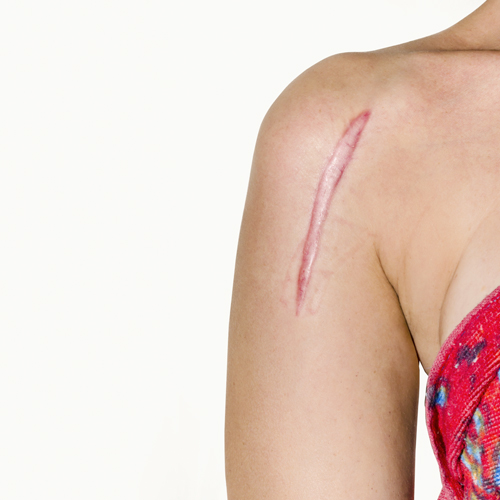
Keloid Scars
Similar to hypertrophic scars but are often larger and extend beyond the boundaries of the original wound. They are caused by an overproduction of collagen that grows beyond the site of the initial injury.
Appearance
Raised, thick, shiny, and sometimes darker or lighter than the surrounding skin. Keloids can become quite large and may itch or cause discomfort.
Common Causes
Surgical incisions, piercings, acne, and burns.
Treatment
Keloids can be challenging to treat. Options include corticosteroid injections, cryotherapy (freezing), laser treatment, and surgical removal, but they may recur.
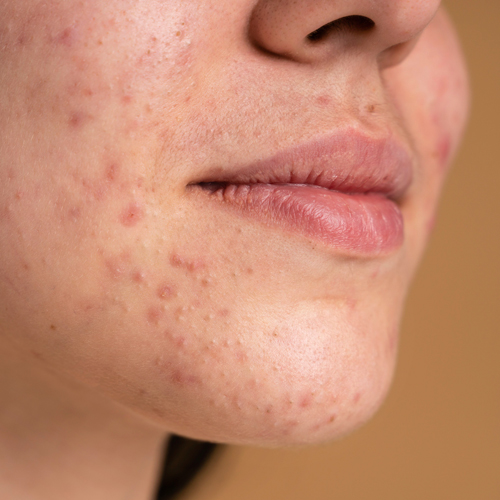
Atrophic Scars
Depressed or indented scars that occur when there is a loss of tissue during the healing process. These scars form when the skin doesn’t produce enough collagen during healing.
Appearance
Sunken, pitted, or hollow.
Common Causes
Acne, chickenpox, or injury.
Treatment
Treatments like dermal fillers, microneedling, and laser therapy can help improve the appearance of atrophic scars.
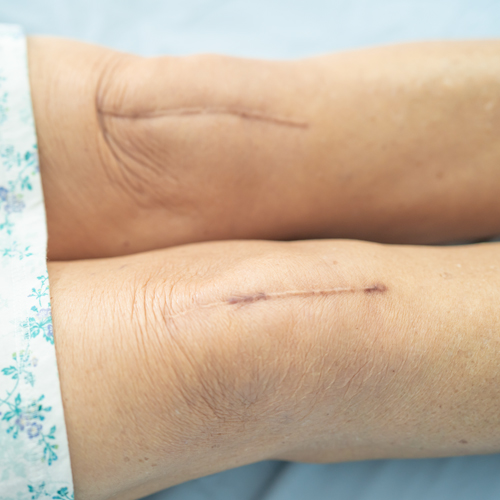
Contracture Scars
Result of a deep burn or injury that causes the skin to tighten as it heals. These scars can impair the movement of the affected area, particularly when they form around joints or other mobile parts of the body.
Appearance
Tight, sometimes leathery skin.
Common Causes
Severe burns, large cuts, or injuries to the skin that damage the deeper layers of tissue.
Treatment
Treatment often involves surgery, physical therapy, and sometimes skin grafts to restore movement and appearance.
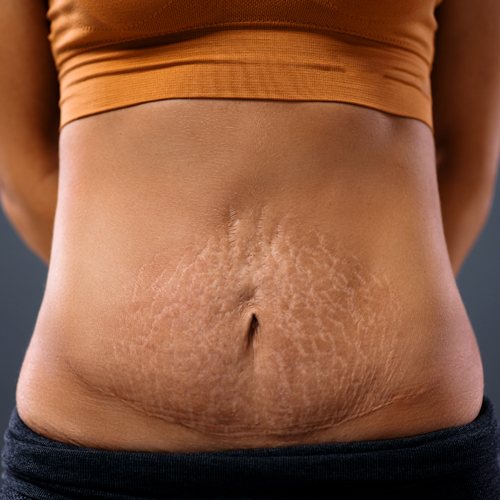
Stretch Marks (Striae)
Caused by rapid stretching of the skin, often during pregnancy, rapid weight gain or loss, or puberty. They are technically a form of atrophic scarring but are distinguished by their appearance.
Appearance
Initially red or purple, but they fade to silvery or white streaks over time.
Common Causes
Pregnancy, rapid weight gain, rapid muscle growth, or hormonal changes.
Treatment
While they are not always treatable, options such as retinoid creams, laser treatments, and microneedling can help reduce their appearance.
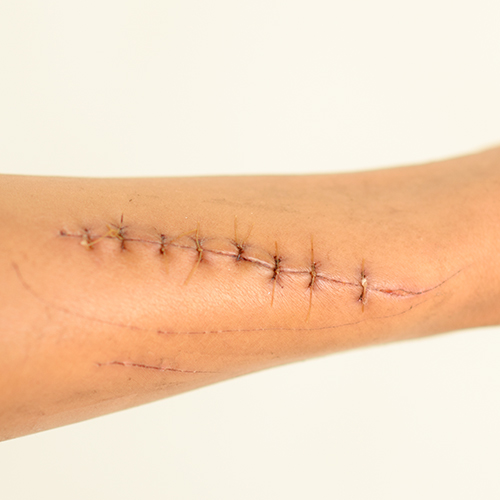
Post-Surgical Scars
These scars are the result of surgical procedures. Depending on the size and nature of the incision, they can vary widely in appearance, from thin, faint lines to raised, more noticeable scars.
Appearance
Varies from thin and faint to thick and raised, depending on healing.
Common Causes
Any surgical incision.
Treatment
Depending on their severity, post-surgical scars can often be minimized with proper wound care, silicone sheets, and treatments such as laser therapy.
Acne Scars
Common type of atrophic scar that occurs when acne lesions cause damage to the skin’s deeper layers. The severity and type of acne scars depend on the type and extent of acne.
Appearance
Indented, pitted scars or raised (hypertrophic) scars.
Common Causes
Severe cystic acne, picking or squeezing acne lesions.
Treatment
Laser therapy, micro needling, chemical peels, and fillers can improve the appearance of acne scars.
Benefits of Million Fractional Therapy with
Dermapen4 for Scar Treatment
Deep Scar Treatment
With ST Mode, Dermapen4 can treat deep scars by penetrating deeper layers of the skin (up to 3mm), promoting significant collagen production and skin remodeling.
Improves Skin Texture and Tone
Helps reduce scar irregularities and skin discoloration, leading to smoother, more even skin.
Safe and Non-Invasive
Offers a non-invasive and safe alternative to more invasive scar treatments, with minimal downtime and no need for stitches or incisions.
Quick and Effective
The treatment is efficient, with visible results often seen within just a few sessions.
Long-Term Results
Collagen production improves skin texture over time, meaning results are often long-lasting, especially with consistent treatments.
Minimal Downtime
Unlike traditional scar treatments, it typically involves minimal downtime.

Why Choose Million Fractional Therapy with Dermapen4 for Scar Treatment?
Effective for All Types of Scars
It can treat acne scars, surgical scars, stretch marks, hypertrophic scars, and more.
ST Mode for Deeper Scar Treatment
The specialized Scar Tissue (ST) Mode is designed to tackle deep, fibrous scars, providing enhanced results.
Customizable Depth and Precision
It allows for precise adjustment of needle depth, ensuring that each treatment is tailored to your specific scar type and skin condition.
Safe for All Skin Types
Unlike other treatments that can cause pigmentation issues in darker skin, it is safe for all skin types, providing effective results without the risk of hyperpigmentation or hypopigmentation.
FDA Cleared
It is FDA-cleared for the treatment of facial acne scars, adding an extra layer of confidence and security for patients.